Historical market snapshot: reported November 11, 2026, at 23:17 UTC+8. This is not a live reading.
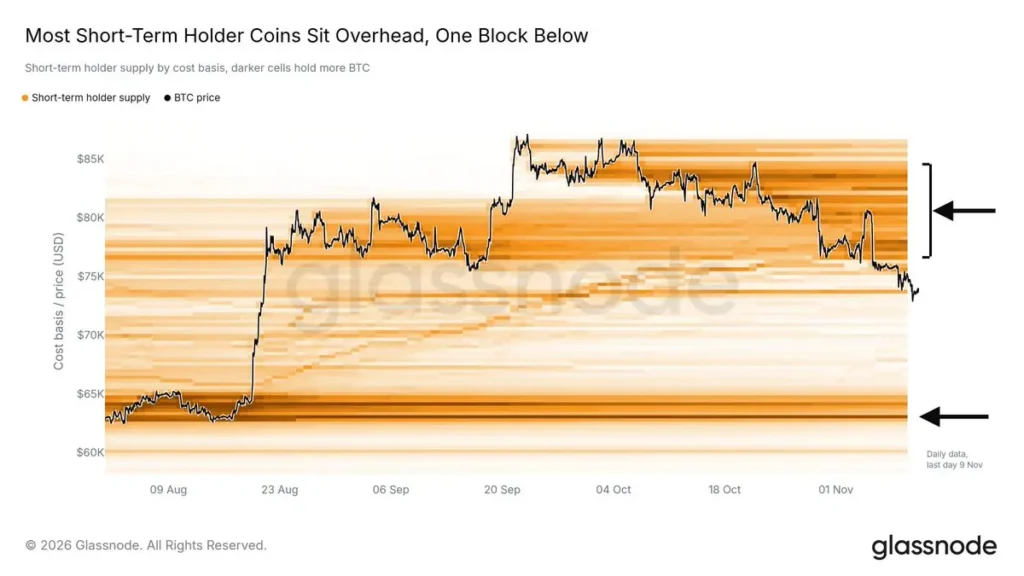
Bitcoin was trading near $74,000, below the $75,600 average cost basis of short-term holders—investors who bought within the previous 155 days—according to Glassnode. About 35% of those holders’ coins were in profit, down from nearly all of them at the September high. Glassnode said roughly two-thirds of their coins had been bought above the then-current price, potentially leaving sellers seeking to break even on a rebound.
Capital flows and relative performance
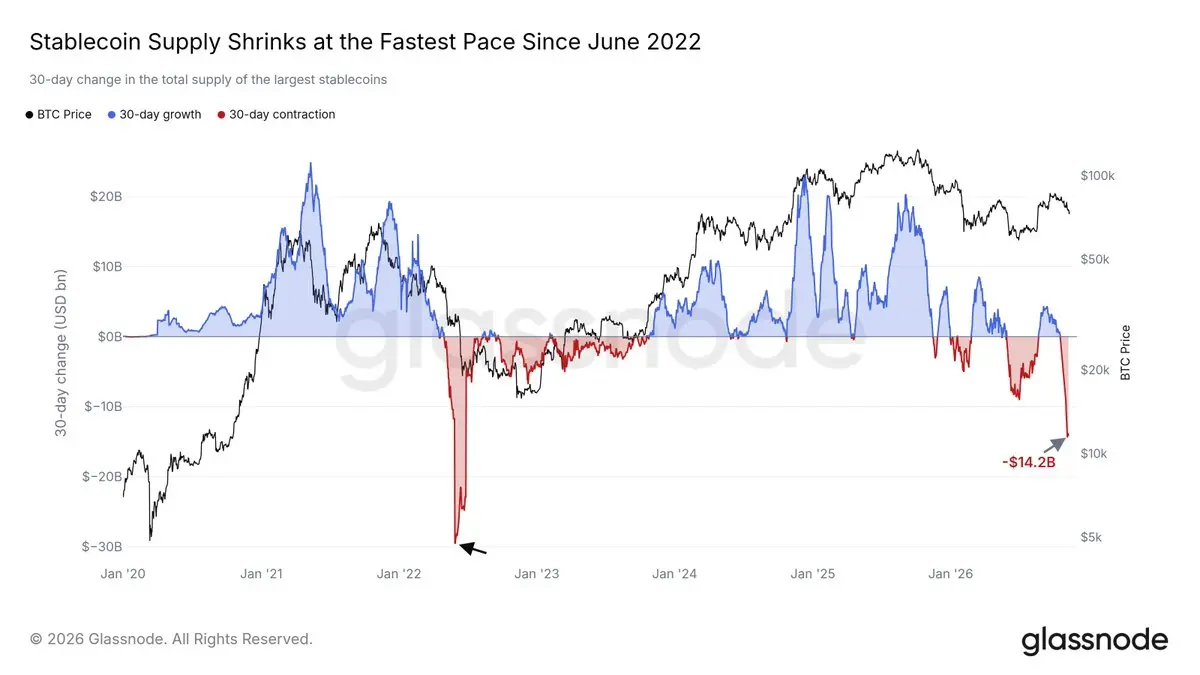
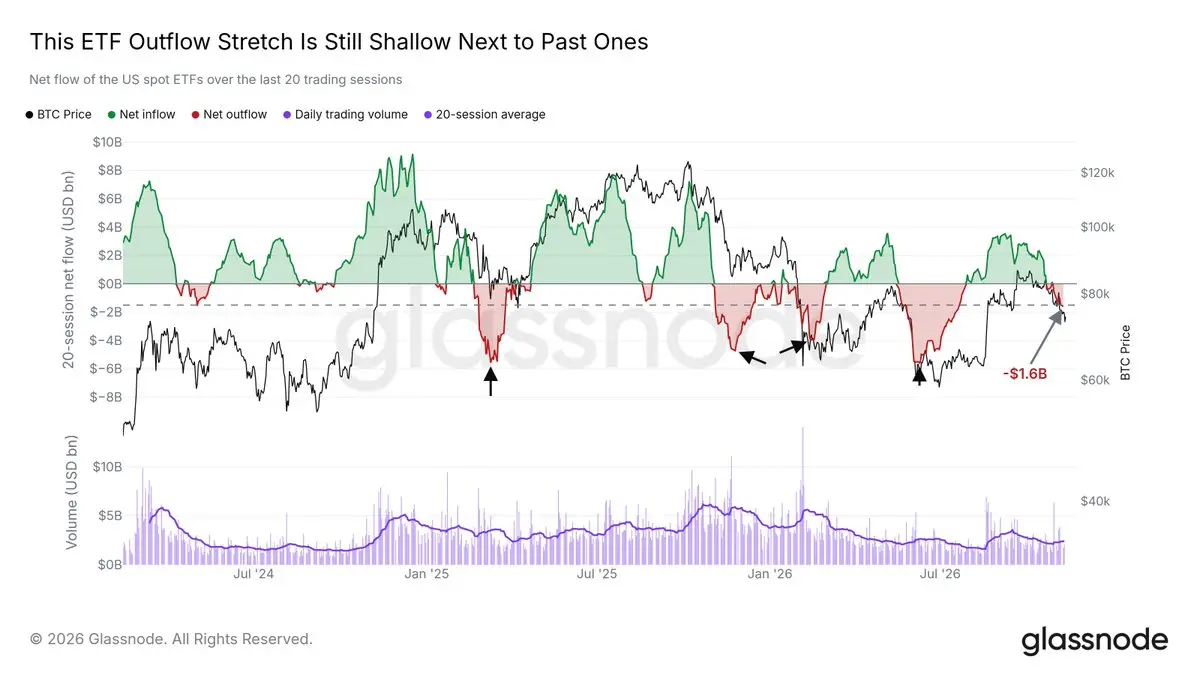
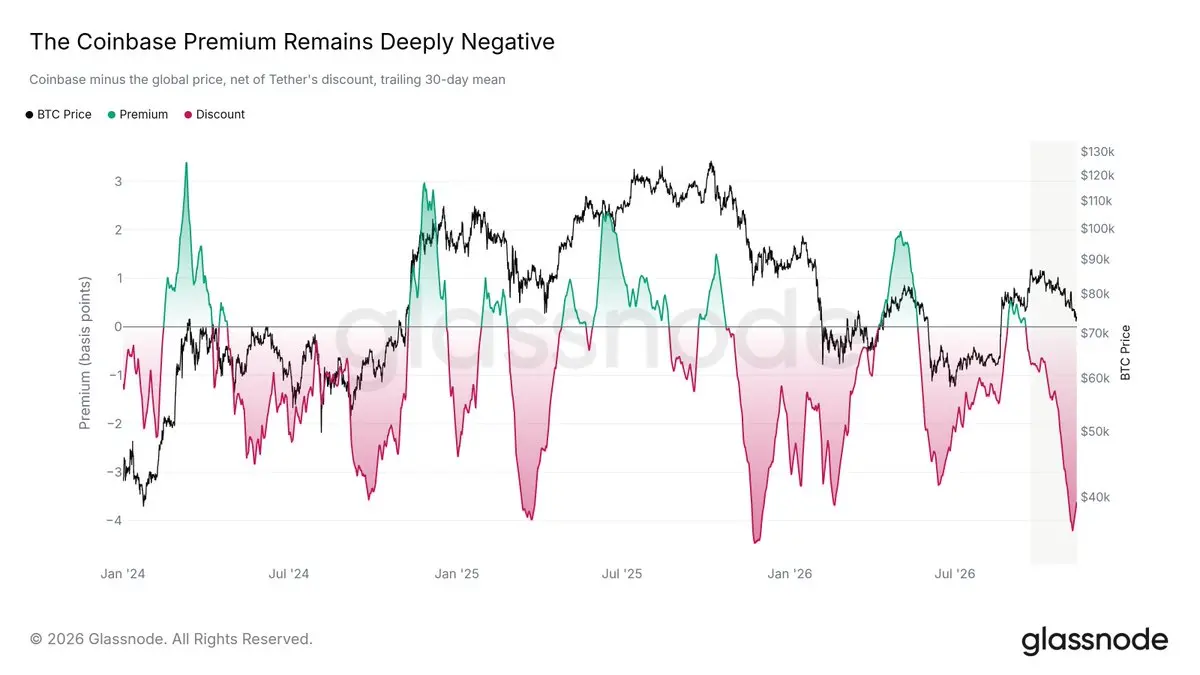
Glassnode reported a $14.2 billion decline in total stablecoin supply over the preceding 30 days, the fastest contraction since June 2022. US spot Bitcoin ETFs recorded $1.6 billion in net outflows over 20 trading sessions. Bitcoin’s 30-day average Coinbase premium was negative and, after adjusting for Tether trading slightly below $1, its discount was the deepest since February. These were separate indications of weaker market liquidity and US demand, not proof of where the price would go next.
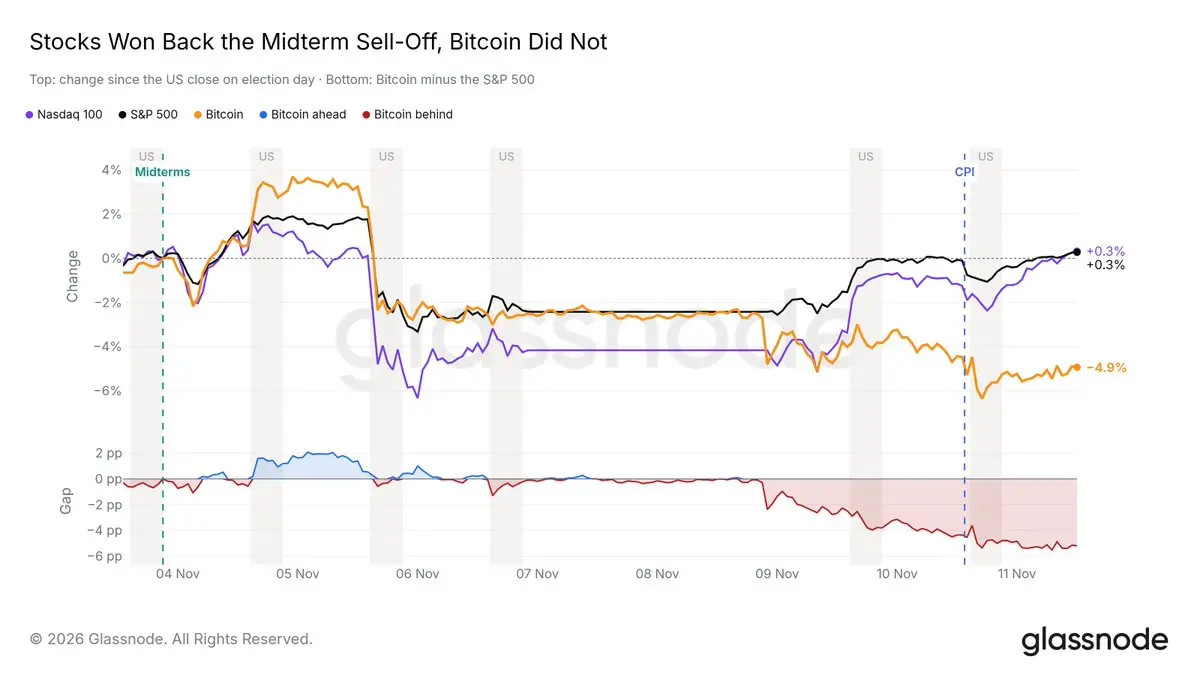
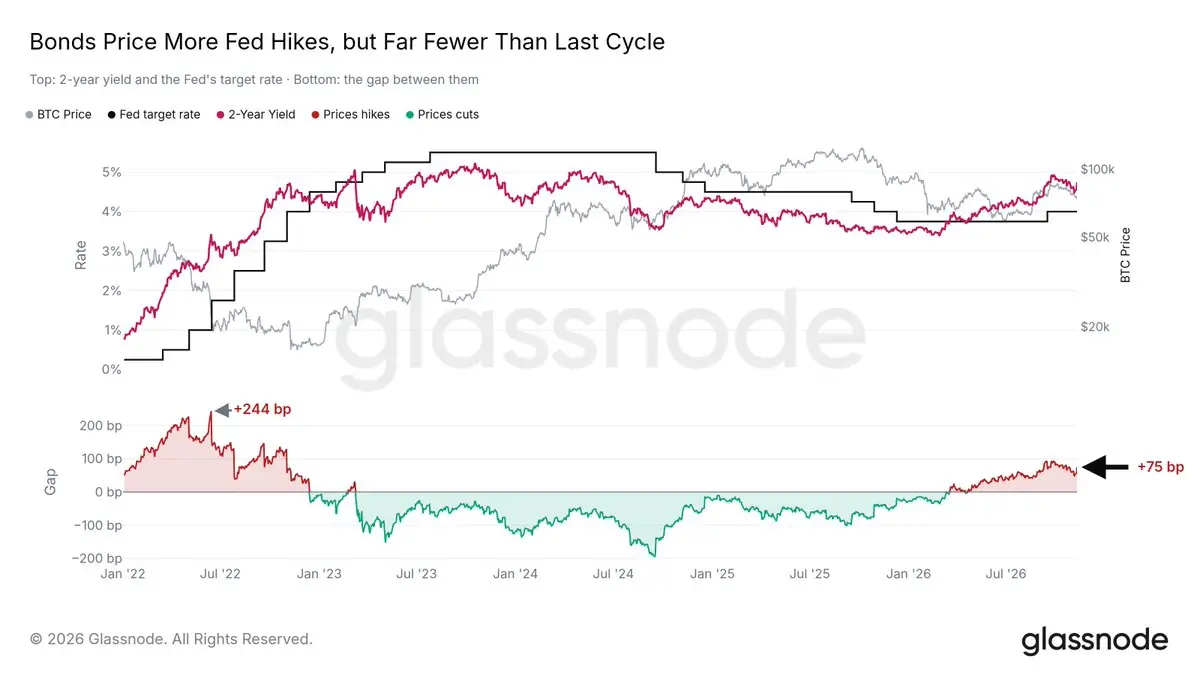
The report also found that the S&P 500 and Nasdaq 100 had recovered above their election-day closing levels after a sell-off that began November 5. Bitcoin fell again following the November 10 CPI release and remained about 5% below its election-day close of $77,800. Meanwhile, the two-year US Treasury yield was 4.75%, versus a 4% Federal Reserve policy rate. Glassnode described the 75-basis-point gap as bond-market pricing for further rate increases, while noting it was well below the 244-basis-point peak in June 2022 and had narrowed since late October.
Positioning offered a different signal
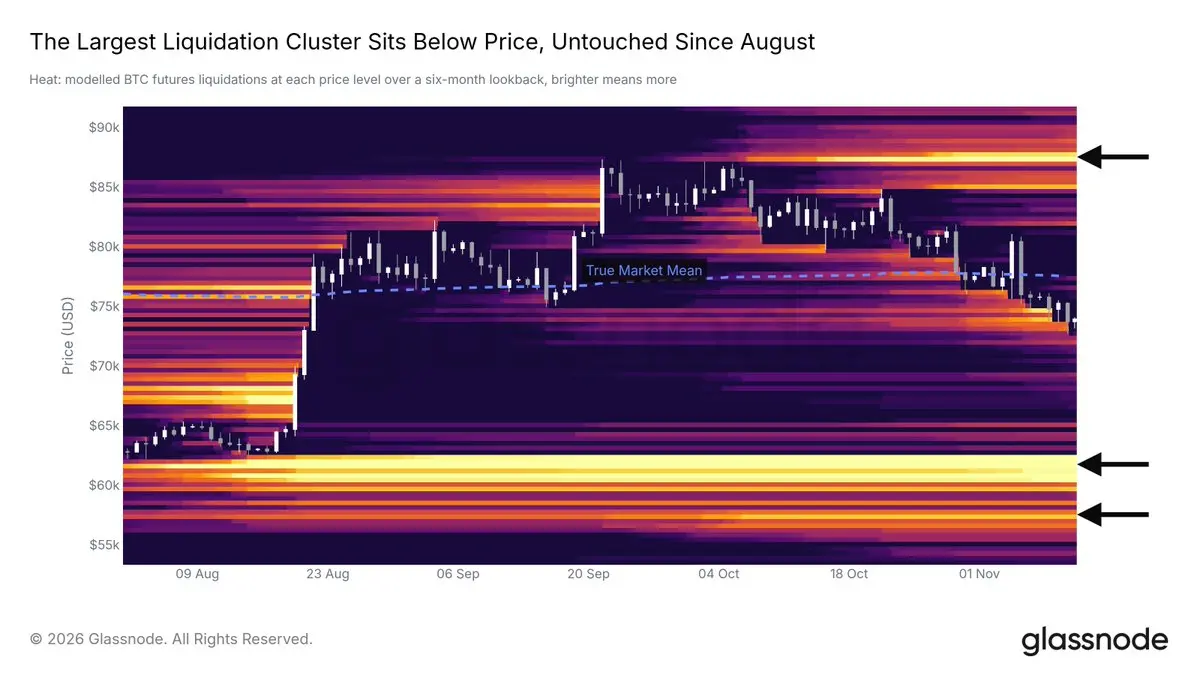
Glassnode said the decline from the September high had cleared most nearby long-liquidation levels. On Binance and Coinbase, posted buy orders within 5% of the price had exceeded sell orders every hour since the November 5 sell-off, with a notable buy-order area at $68,000–$72,500. Orders can be withdrawn, however, and some had been removed and reposted during the sell-off.
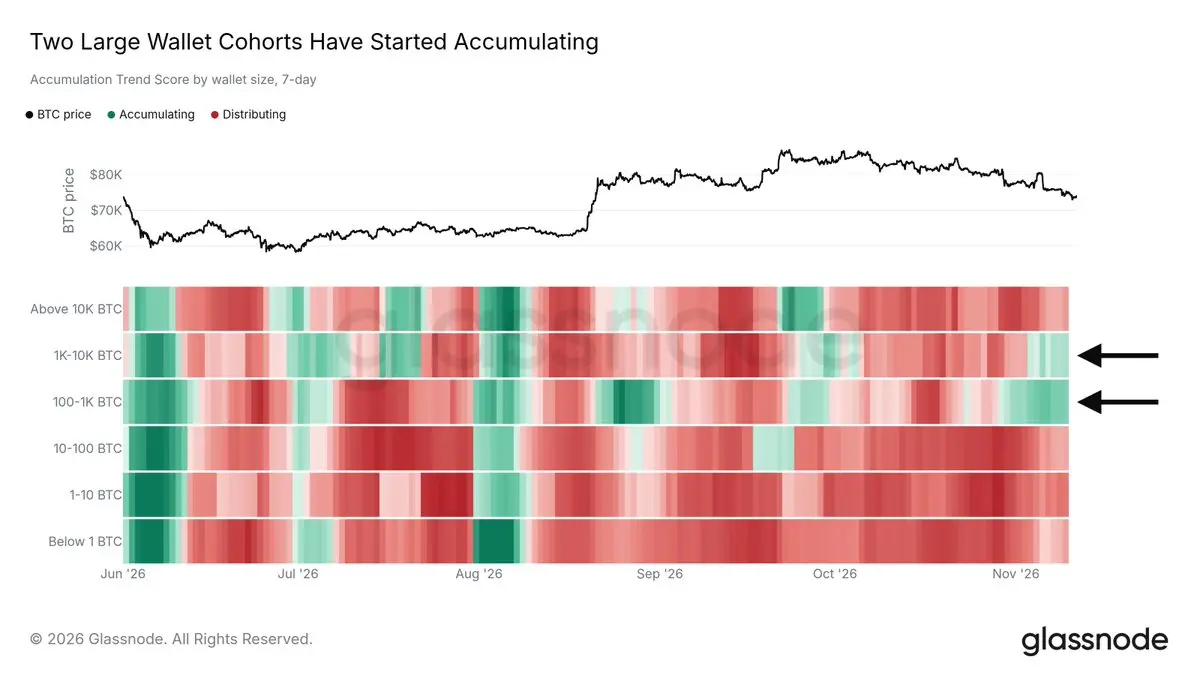
Over the preceding week, wallets holding 100–1,000 BTC and 1,000–10,000 BTC each registered an accumulation trend score above 0.5; other wallet-size groups were still reducing holdings. Glassnode cautioned that a similar buying shift by those two groups in late September had not lasted.
Glassnode viewed the September high as the first higher high since Bitcoin’s 2025 all-time high. In its assessment, the broader shift that began in August remained intact while price stayed above the June low of $58,500. It identified $75,600 as a level relevant to short-term holders’ cost basis and said a sustained move below $73,000 would point to a longer consolidation. These are the report’s conditional assessments, not forecasts.
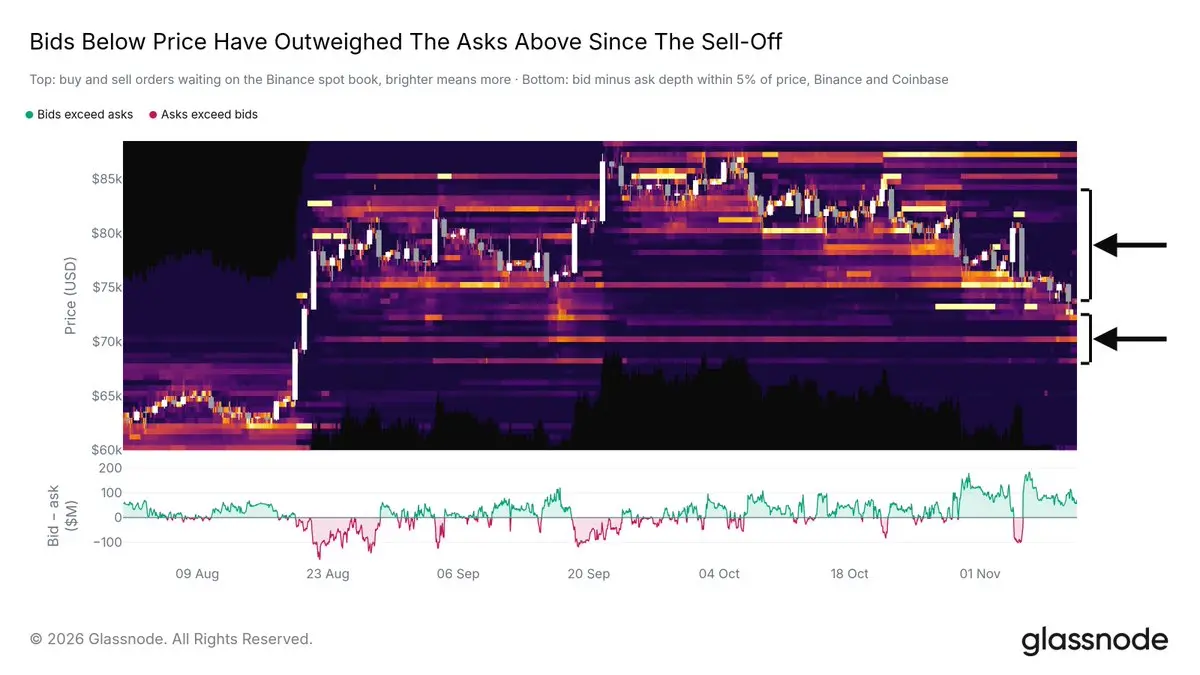
Observation times: Data through November 11, 2026; price and derivatives at 11:00 UTC and order books at 09:00 UTC. ETF flows, stablecoin supply, cost-basis data and accumulation scores were through November 9.
Source: chaincatcher.com (originally published 2026-11-11 23:17 UTC+8)