Historical market snapshot: originally reported November 11, 2026, at 00:27 UTC+8, covering Tuesday’s U.S. inflation release and market reaction.
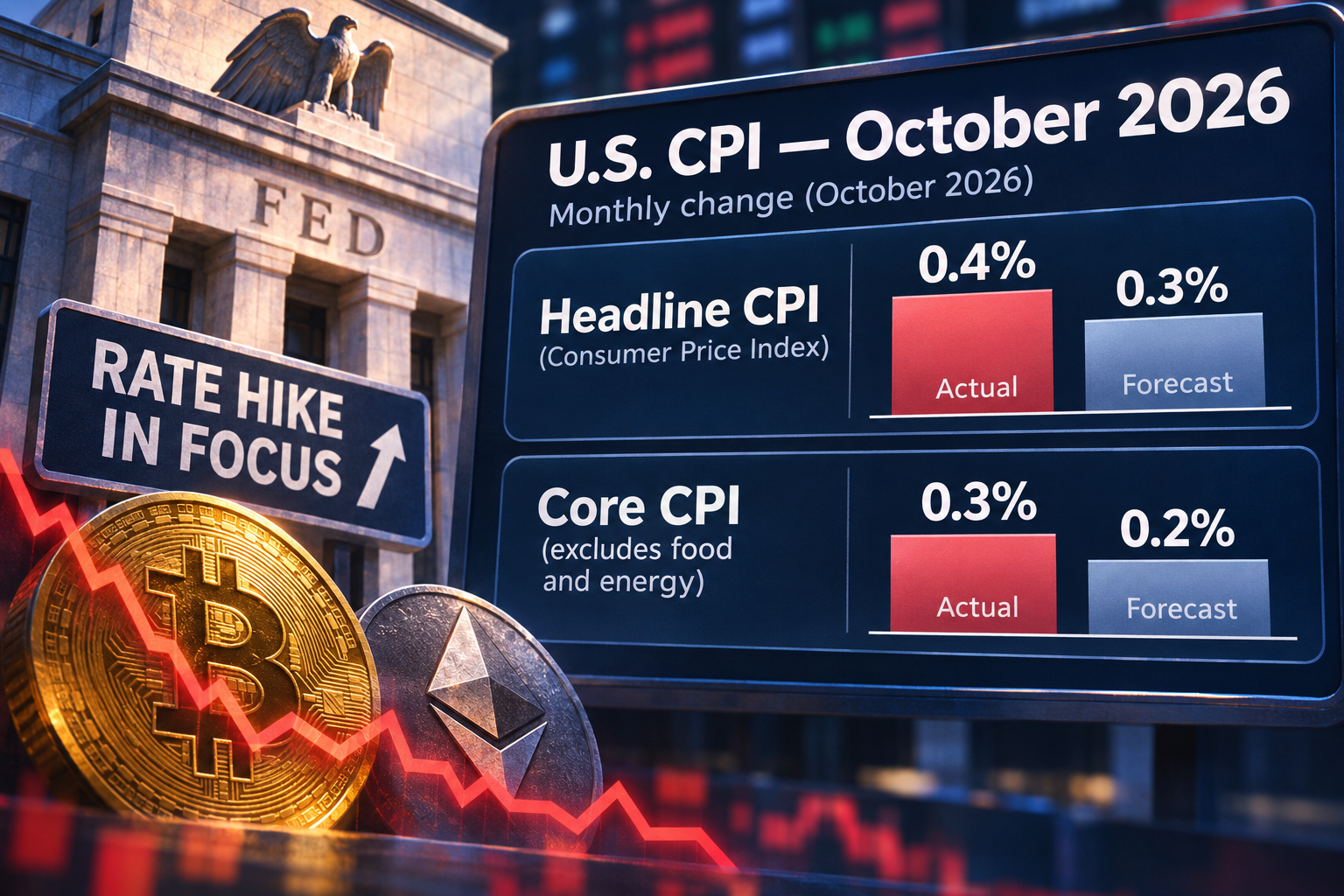
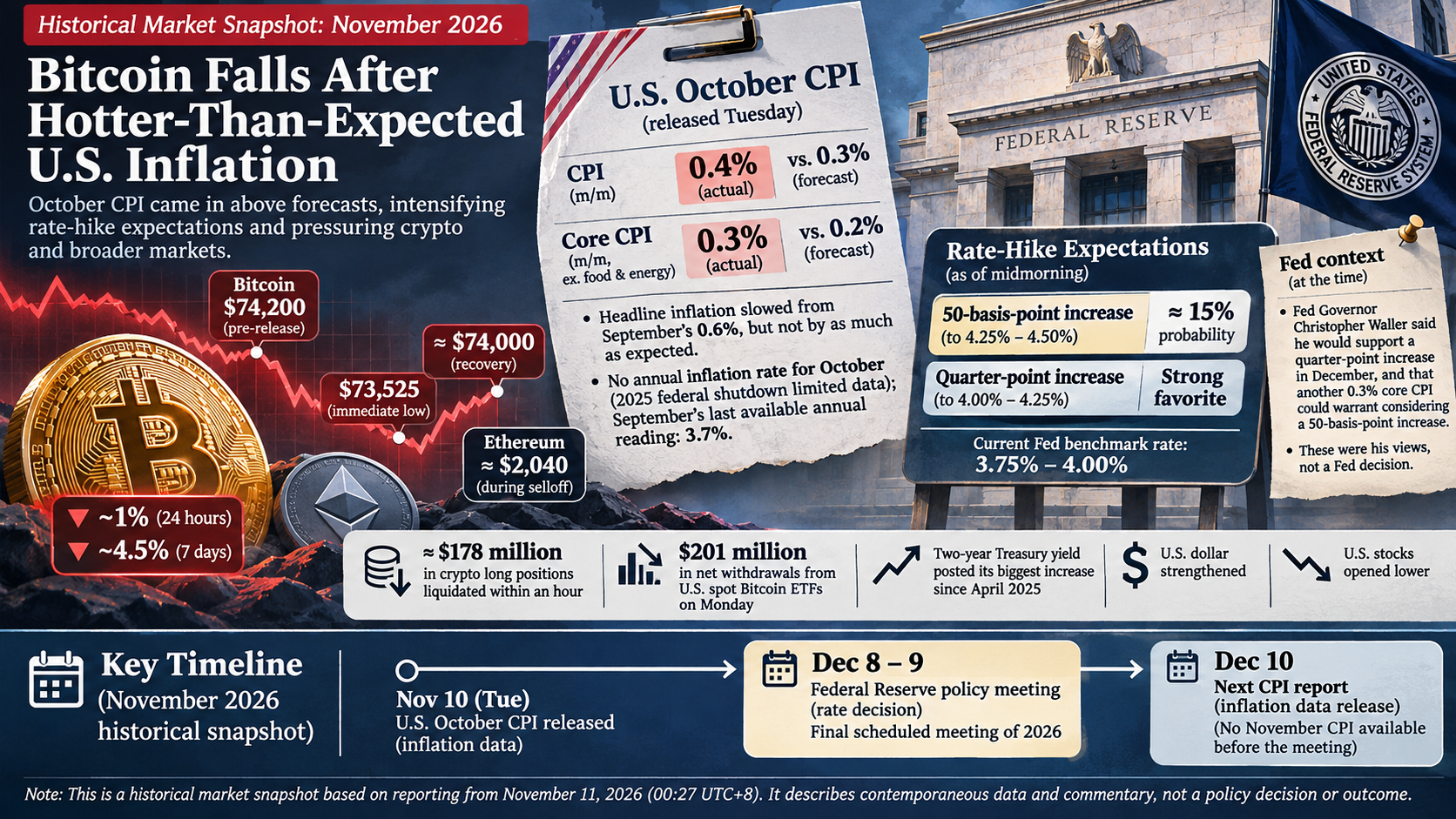
Bitcoin briefly fell below $74,000 after U.S. October inflation exceeded forecasts. The Consumer Price Index (CPI) rose 0.4% month over month, against a 0.3% forecast. Core CPI, which excludes food and energy, rose 0.3%, against an expected 0.2%. Headline inflation slowed from September’s 0.6% monthly increase, but not by as much as economists had expected.
Price and positioning at the time
Bitcoin traded near $74,200 before the release, dropped to approximately $73,525 immediately afterward, then recovered toward $74,000. It was roughly 1% lower over 24 hours. Ethereum slipped toward $2,040 during the initial selloff. About $178 million in crypto long positions were liquidated within an hour of the announcement; liquidation means an exchange forcibly closes a leveraged position when its collateral is insufficient.
The market had already weakened before the CPI release. Bitcoin was down roughly 4.5% over seven days, while U.S. spot Bitcoin ETFs recorded $201 million in net withdrawals on Monday. Those figures describe separate observations; they do not establish that ETF flows caused the immediate price move.
The rate-policy question
Hours before the CPI release, Federal Reserve Governor Christopher Waller said he would support a quarter-percentage-point rate increase in December even if inflation improved. He said another 0.3% core CPI reading could warrant considering a 50-basis-point increase. October’s reading met that condition, but Waller’s comments were not a Fed decision.
According to Reuters, analysts’ estimated probability of a 50-basis-point increase had risen to nearly 15% by midmorning; a smaller quarter-point increase remained the strong favorite. At the time of reporting, the Fed’s benchmark rate range was 3.75%–4%. A 50-basis-point increase would take it to 4.25%–4.50%. The two-year Treasury yield posted its biggest increase since April 2025, the dollar strengthened, and U.S. stocks opened lower.
October’s CPI had an unusual data limitation: the government did not publish its standard annual inflation rate because the 2025 federal shutdown had prevented collection of October data that year. The last available annual headline reading, for September, was 3.7%. The Fed’s 2% inflation target is formally measured using a different index, Personal Consumption Expenditures.
The Fed’s final scheduled policy meeting of 2026 was December 8–9. With the next CPI report due December 10, policymakers were set to make that decision without November’s consumer inflation figures.
Source: decrypt.co (originally published 2026-11-11 00:27 UTC+8)