Historical snapshot: Published November 10, 2026, at 15:55 (UTC+8). The figures below reflect the periods cited in the original report, not current readings.
Ethereum co-founder Vitalik Buterin said on November 8 that he preferred framing ETH as a store-of-value asset rather than anchoring its value to transaction-fee burns. That shifts attention from the “ultrasound money” narrative toward a harder question: does activity on Ethereum create lasting demand to hold ETH?
Network use is not the same as ETH demand
PANews described ETH’s proposed role as an asset held, staked and used as collateral within Ethereum’s financial infrastructure. Bitmine chairman Tom Lee similarly characterized ETH as trusted collateral rather than a “cash-flow” token like HYPE or LIT.
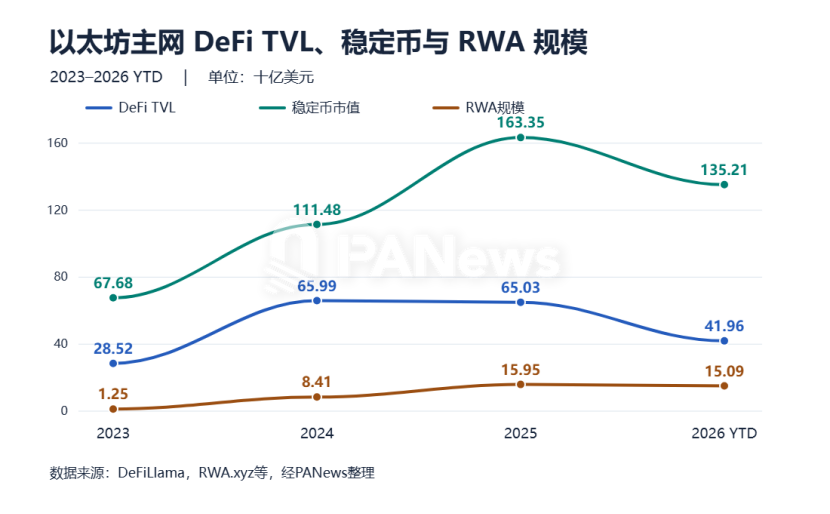
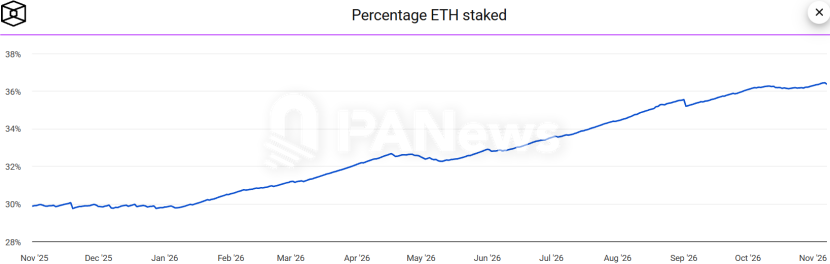
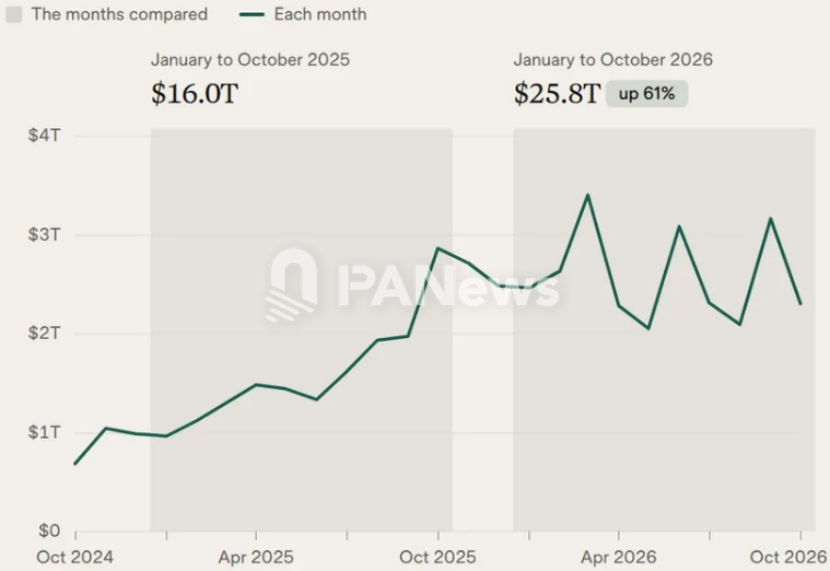
The Block data cited in the report put staked ETH at 36.36% of circulating supply, versus 29.91% the previous year. Other measures showed substantial use of the network: Ethereum Institutional reported $25.8 trillion in mainnet stablecoin transfers during the first ten months of 2026, up 61% year over year. DeFiLlama figures cited by PANews put mainnet DeFi total value locked at about $42 billion, stablecoin market capitalization above $135 billion, and real-world assets at $15 billion.
Those measures describe activity and assets on Ethereum; they do not establish equivalent demand to buy ETH. As PANews noted, an institution could issue tokenized assets, use USDC for settlement and need only a small amount of ETH for gas.
The burn argument faces a smaller fee base
Buterin illustrated the valuation limit with a hypothetical: $1 billion in annual fee burns, valued at a 4% discount rate, would imply about $25 billion in present value. Applying the same calculation to ETH’s roughly $260 billion market capitalization cited by PANews would require sustained annual burns of $10.4 billion. Transaction fees, however, are not a stable cash flow.
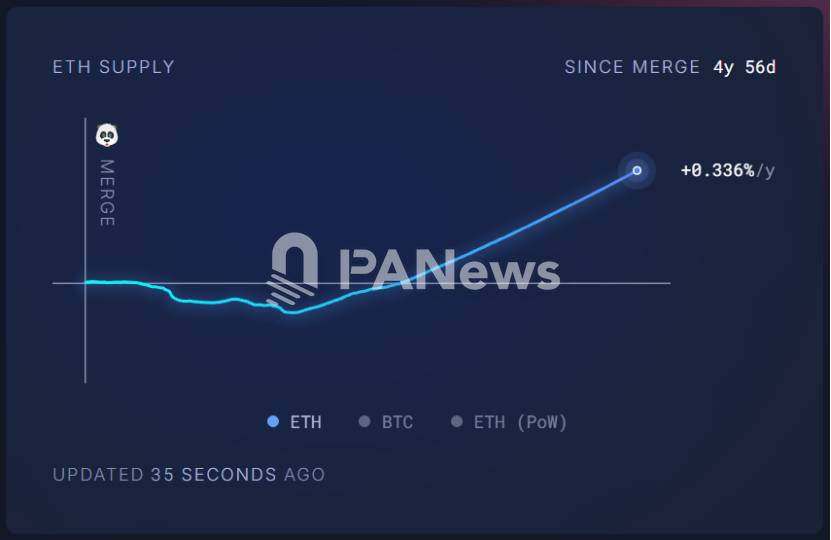
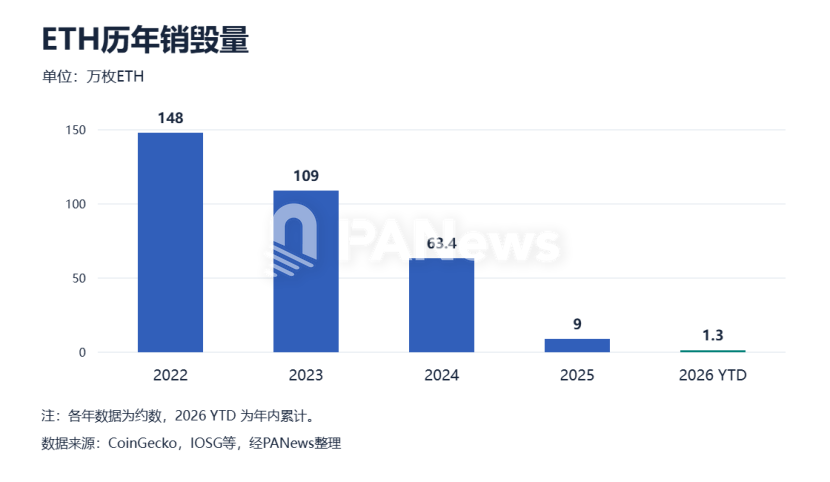
The report said approximately 1.48 million ETH was burned during 2022, compared with about 13,000 ETH—worth roughly $27.3 million at the cited market price—from the start of 2026 through the report’s observation point. That is a decline of more than 99% in token count, although the periods differ in length. PANews also reported that ETH returned to net inflation in February 2025.
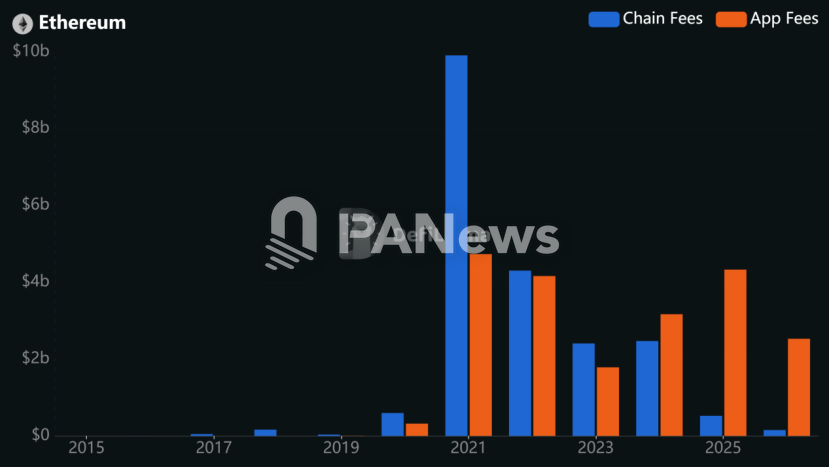
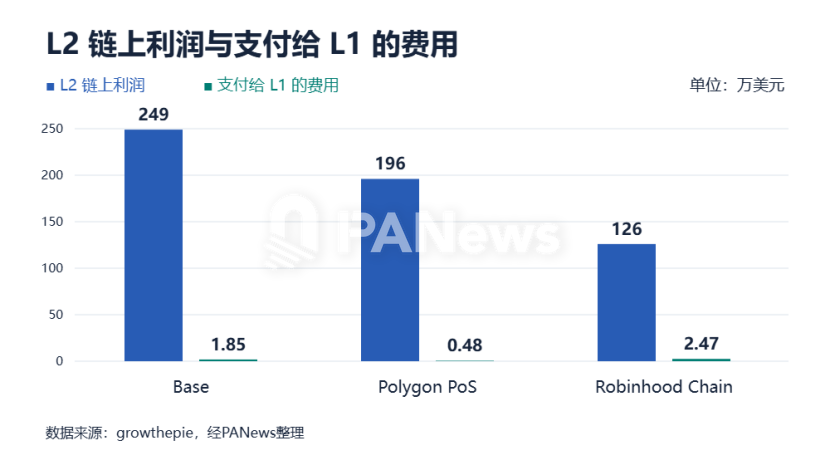
Fee distribution adds another constraint. DeFiLlama figures cited by PANews put 2026-to-date Ethereum mainnet fees at about $152 million, against $2.529 billion for applications on mainnet—more than 16 times as much. Over the report’s preceding 30 days, growthepie data showed about $5.71 million in combined on-chain profit for the top three Ethereum layer-2 networks, including $2.49 million for Base. Their combined payments to mainnet for settlement were about $48,000, including $18,500 from Base.
Lower fees may make small, frequent transactions more practical, but the report did not establish that future volume will offset lower fees per transaction. ETH’s store-of-value case therefore remains distinct from Ethereum’s usage figures: it depends on whether that usage translates into sustained demand to hold the asset.
Source: panewslab.com (originally published 2026-11-10 15:55 UTC+8)